 NicheQuill
NicheQuill helps self-publishers and small publishers turn an idea into a consistent book — with planning, chapter generation, story tracking, metadata, cover assets, quality checks, and final export.
Built for people who want to publish faster without losing structure, quality, or control.
Generating words is easy. Building an actual book is where almost every tool falls apart.
Chapters drift off-topic. Names change. The plot breaks halfway through. Metadata doesn't match the manuscript. The cover feels disconnected from the content. And in the end, you still have to fix everything by hand.
NicheQuill exists to solve exactly that. It's not just about writing faster — it's about creating books through a structured workflow that holds together from start to finish.
Choose language, genre, topic, audience, tone, and format direction.
Generate niche angles, title directions, book structure, outline, and chapter objectives before you write a single word.
Every chapter is created from a structured brief, not an isolated prompt.
Story logic, names, relationships, timeline, and chapter flow stay aligned through built-in consistency systems.
Create metadata, cover direction, descriptions, and export-ready files in the same workflow.
Continuity Check, and for Mystery books Reveal Check and Timeline/Alibi too — every clue and every fact verified individually before export unlocks.
NicheQuill helps turn a vague idea into a concrete editorial direction. Instead of starting from a blank page, you can start from a topic and quickly turn it into usable angles, themes, positioning, and book ideas — making it easier to decide what's actually worth building, and avoid weak projects from the start.

Most bad AI books fail before chapter one is even written — because there's no real structure behind them. NicheQuill builds the skeleton first: book summary, outline, chapter objectives, tone direction, and content flow. This level of planning gives the project a solid foundation before writing begins.
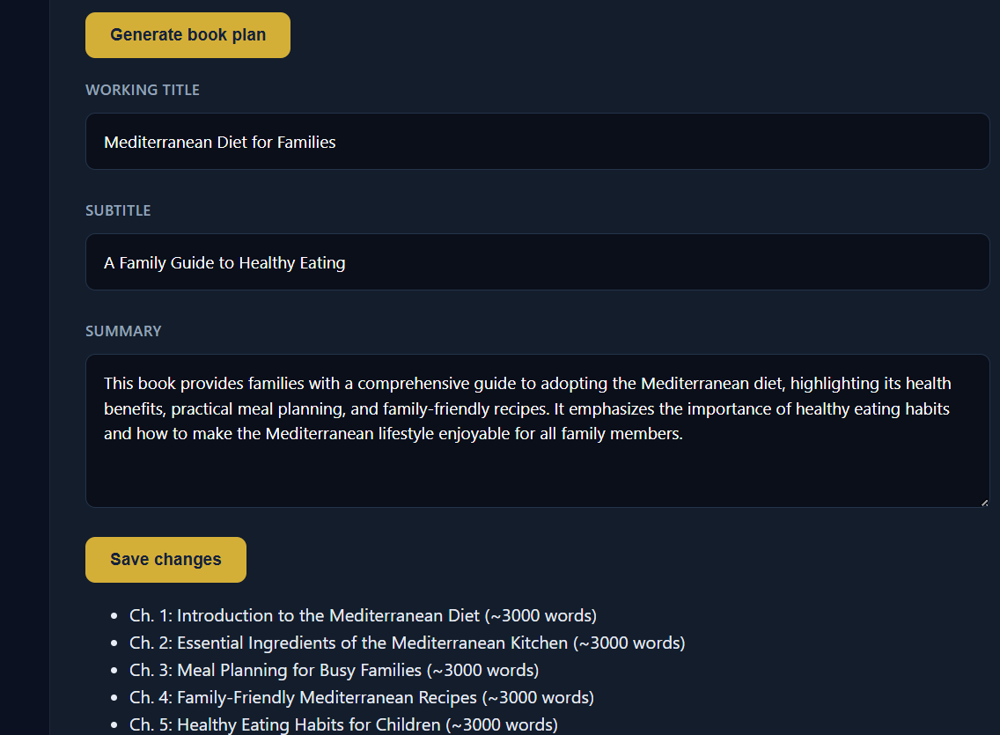
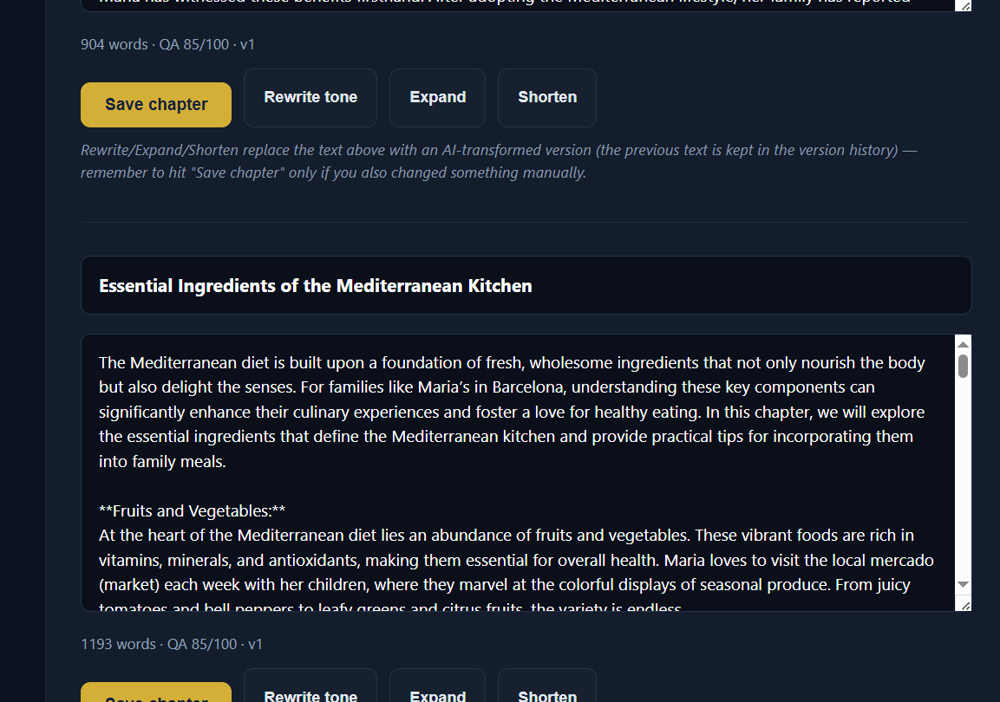
A long-form book can't be treated as a single prompt. NicheQuill generates chapter by chapter using structured briefs that tell the system what matters at that point in the book, what's already happened, which characters are involved, and what the chapter needs to accomplish. This leads to a cleaner manuscript and a far more usable draft.
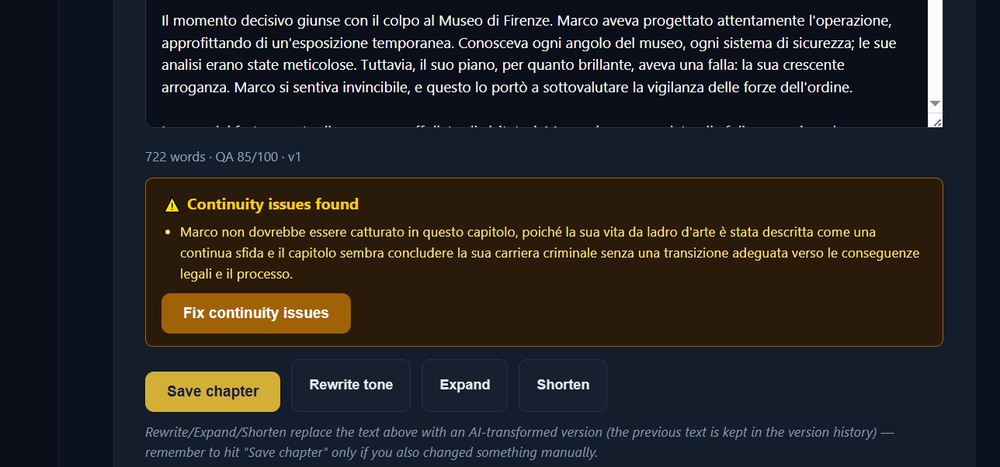
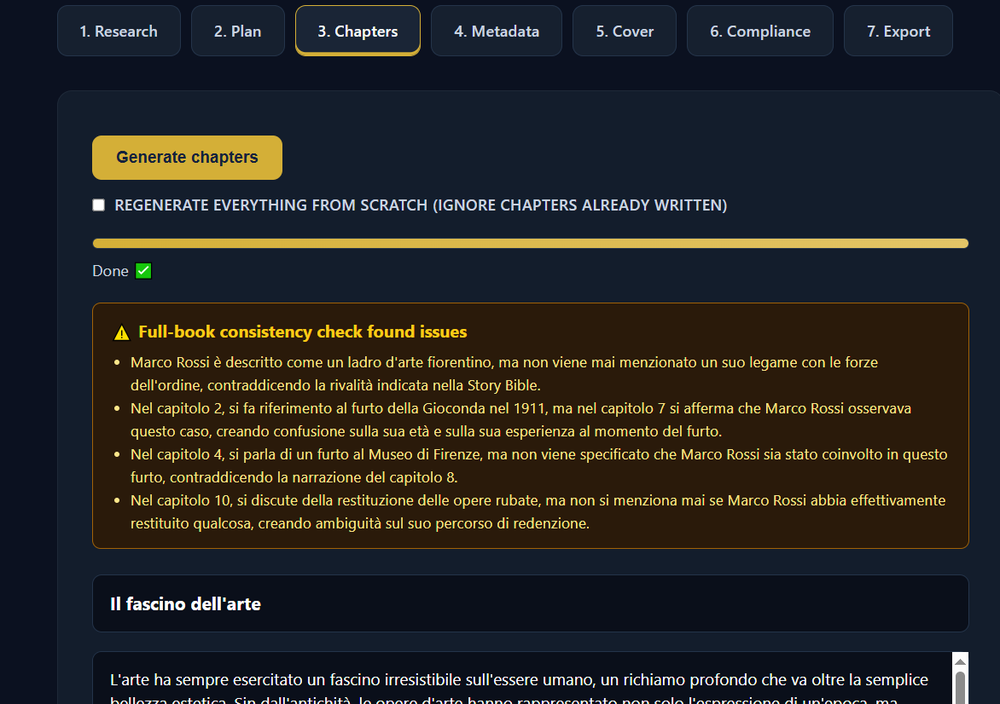
This is where most AI tools break down. NicheQuill uses a structured system with a Story Bible, Character Bible, Plot Bible, Rolling Memory, and Continuity Check. Instead of hoping the model remembers everything on its own, the system tracks what's already been established and validates new chapters against those facts — helping avoid broken plots, name changes, inconsistent character behavior, timeline errors, and random shifts in tone or point of view.
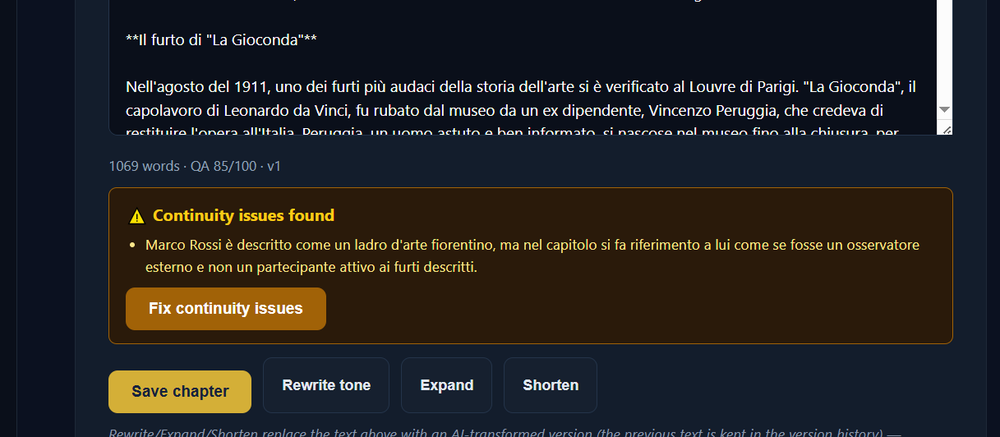
If a character has a name, a role, a goal, a relationship, and an arc, that information needs to stay stable across the whole book. NicheQuill is designed to protect these fixed elements while still leaving room for the manuscript to evolve — resulting in a book that follows a line, instead of collapsing halfway through.
After every chapter, the system updates what has changed: new facts, important events, relationship changes, timeline progress, open threads, and key objects. This is a fundamental difference from simple text generation — the app doesn't just remember the last output, it saves the important facts that need to keep mattering in later chapters.
Every new chapter can be checked against the facts already fixed in the project. If the system finds contradictions in names, timeline, plot, relationships, world rules, or point of view, the chapter shouldn't pass cleanly — the issue is flagged so the broken part can be fixed before moving forward.
For Mystery/Detective books, before unlocking export NicheQuill runs a real fair-play check: it verifies the culprit is introduced early enough in the story, that motive/means/opportunity are clearly established, and — critically — checks every single essential clue by name — not "probably all there", but one by one, with an explicit verdict on each. If anything is missing or contradictory, export stays blocked until it's genuinely resolved.
Every stated alibi is automatically cross-checked against what actually happens in each chapter, to catch silent contradictions the author (human or AI) might miss. But the system knows how to tell a real error apart from an intentional reveal: if a suspect confesses or gets exposed, it's not flagged as a problem — because that's exactly how a mystery is supposed to work.
A finished draft isn't enough. A real editorial workflow also needs a title, subtitle, description, keyword direction, cover logic, and alignment with categories and positioning. NicheQuill helps create these assets within the same project, so the final package is more coherent and easier to prepare for publishing.
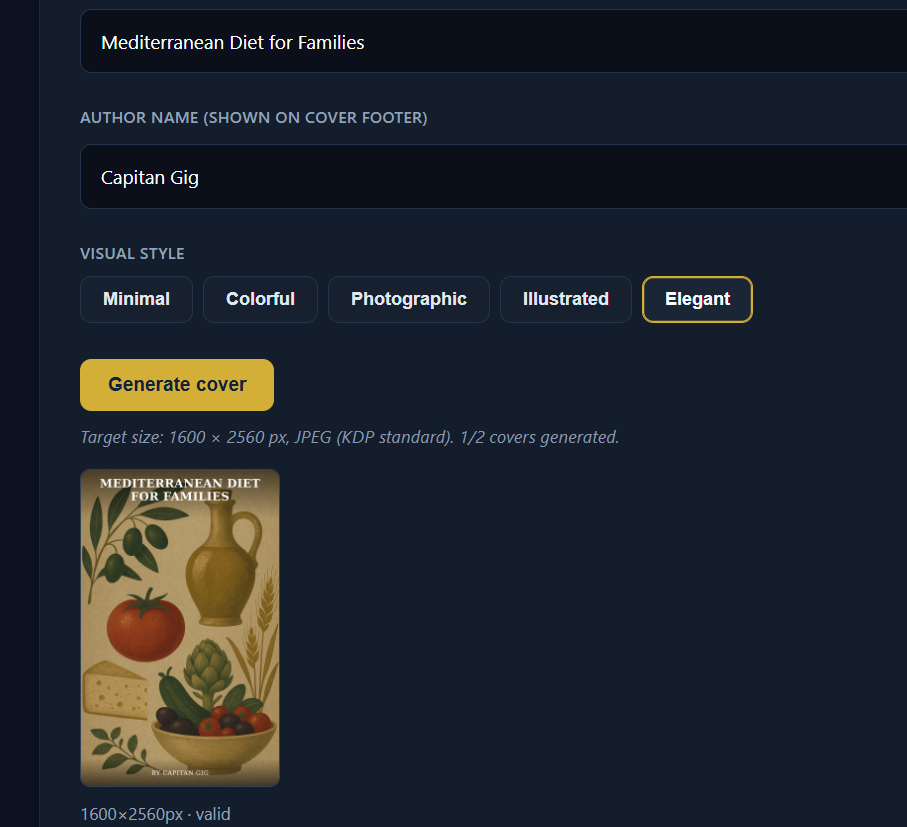
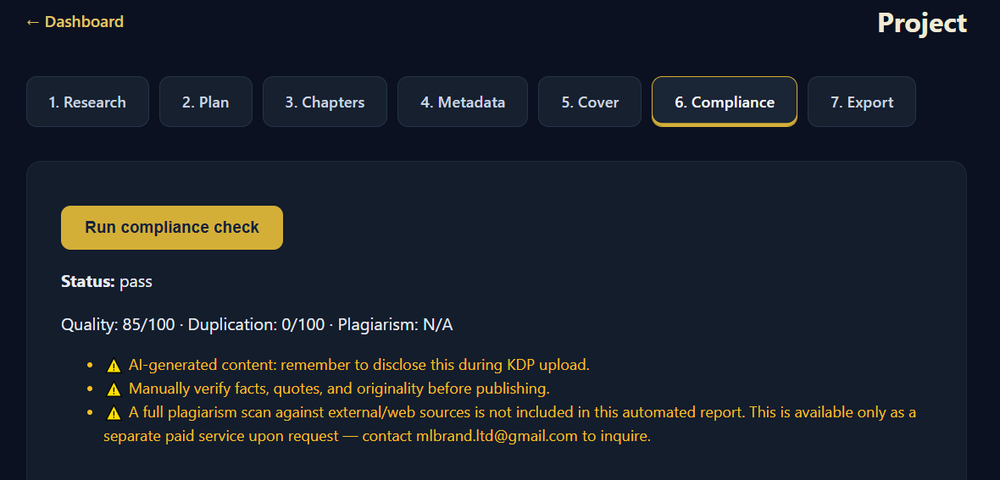
The app is designed to catch the most common problems before a project is finalized. This includes internal duplication risk, weak structure, metadata mismatches, cover mismatches, language mismatches, and long-form consistency issues — with the goal of reducing poor output before it becomes a problem at publishing time.
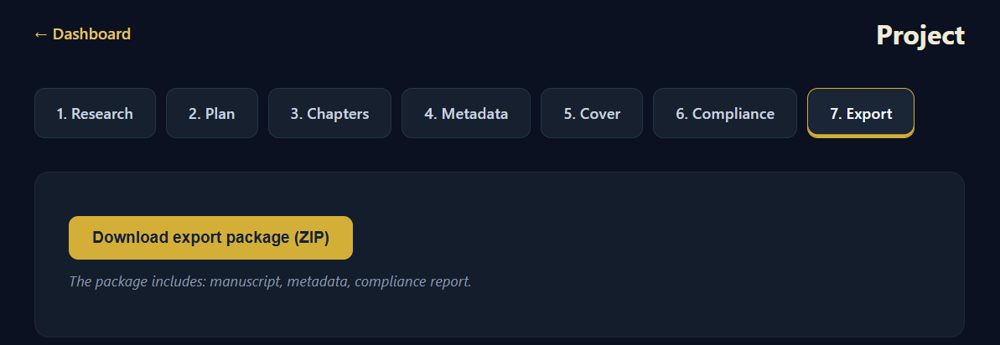
NicheQuill is built to cut out the messy part between writing and publishing. Instead of leaving you with scattered files and manual cleanup, the workflow is designed to bring you to a more organized final package — manuscript, assets, metadata, cover flow, and final review, all in the same place.
If the goal is to publish faster without losing control over quality, consistency, and packaging, NicheQuill is built for this workflow.
NicheQuill is a structured AI workflow to plan, generate, check, and prepare books.
No. It's designed to handle the whole workflow around the book, not just generate text.
Yes. It's specifically built to support long-form projects with structured planning, chapter briefs, memory, and continuity checks.
Yes. It's one of the core parts of the product.
They really happen — it's not a random score. Every chapter goes through an automatic check that compares facts, characters, and timeline against what's already established in the project, and for Mystery books, every essential clue is individually verified by name before export unlocks.
No. It's designed for broader editorial workflows, including non-fiction, fiction, children's books, workbooks, and guided formats. Amazon KDP still treats low-content books as their own specific category with their own characteristics.
Yes. It supports title, subtitle, description, keyword direction, and other book-related assets.
It's best suited for people who already know the basics of self-publishing and want a faster, more structured workflow.
Yes. The whole system is designed to reduce narrative drift, duplication, mismatches, and manual corrections.